" I am cut to the brains

August 17, 2022

Rosencrantz and Guildenstern

I have directed several productions of Hamlet.  Here are some miscellaneous musings about the characters Rosencrantz and Guildenstern.  

Guildenstern seems more intelligent and (not warm) but warmer and more patient than Rosencrantz.  Also he has more humor and is more of a leader.  In the early scenes, he is definitely in charge (though not in a pushy way).  Rosencrantz seems more physical and rougher…and potentially more cruel. 

As Hamlet makes his complete break with them at the end of Act lll, Sc. 2 (the play scene) Rosencrantz starts to take over – Guildenstern’s last time in charge is when he believes the message from Gertrude to Hamlet that she wants to see him.  As reason and patience (Guildenstern) fail, force and brutality (Rosencrantz) take over. 

In the following scenes Guildenstern is almost silent and all we hear is the ominous tone and threats of Rosencrantz.  Obviously, they have worked out strategy and concomitant ramifications following each altercation with Hamlet and Guildenstern ultimately prevails.  

In the end, through their actions, we see them for what they really are: two educated thugs willing to carry out their lord’s orders even if it means murder.  We should feel little sympathy for their impending deaths.

https://www.alexanderbarnett.com
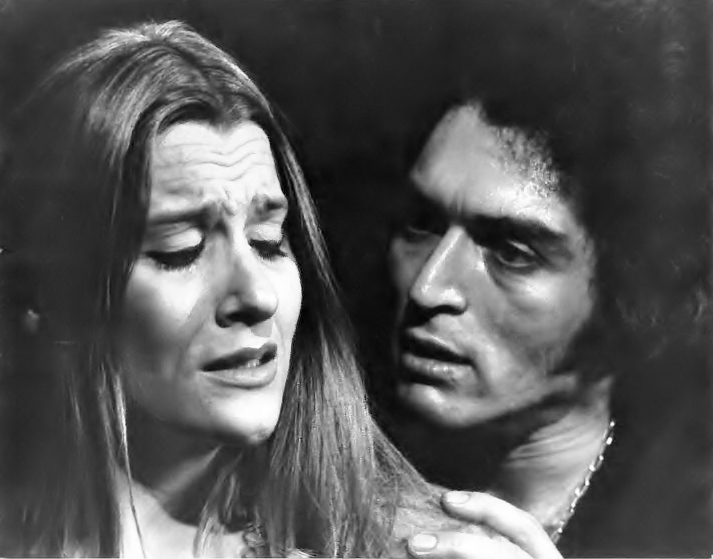
The Closet Scene: Gertrude and Hamlet (Alexander Barnett)


July 19, 2022

Macbeth Revisited (A Rebuttal)

I caught an interesting and depressing Charlie Rose interview with Liev Schreiber discussing Macbeth.  Mr. Schreiber was taken aback by Rose's referring to Macbeth as evil.  Schreiber them proceeded to explain the typical age-old argument of Macbeth as a good (And to many, a great) man gone wrong who kills Duncan to please his wife and who, ultimately, greatly regrets having done the deed because he is a man of deep conscience.  This is after all a tragedy and therefor requires the fall of an individual of great stature and/or position.

Wrong!

June 06, 2022

King Lear Film - Act 1 Scenes 3-5

 Stream on Amazon Prime - Episode 3

Alexander Barnett as Lear; Aaron Strand as Fool; Peter Holdway as Kent

1.3

         As Goneril informs Oswald of her intentions to put an end to Lear’s careless and erratic behavior, we see the true extent of her ambition. Goneril is indeed resentful of Lear for favoring Cordelia and disgruntled having endured a lifetime of his rule, but that is not why she acts. Nor does she wish to punish him for the rowdy behavior of his knights as she claims to in the next scene; the reasons she states are excuses. The knights are a nuisance, but she sees them merely as obstacles, not adversaries. Goneril is fed up, but it is from having to hold herself back. Her eagerness to render Lear impotent and cast him out of the kingdom comes first and foremost from her inner drive and ardent desire for power and independence.